
7 Yoga Poses That May Reduce Bloating Naturally
Bloating can turn an otherwise normal day into an uncomfortable one. Your stomach may feel tight, heavy, or unusually full, especially after a large meal or when digestion is sluggish. While bloating can have several causes, gentle movement such as yoga may help support digestion and encourage trapped gas to move through the digestive system.
The good news? You don’t always need an intense workout. A few simple yoga poses, combined with slow breathing, can be a relaxing way to get your body moving.
Here are 7 yoga poses that may help to naturally reduce bloating and are easy to do at home.
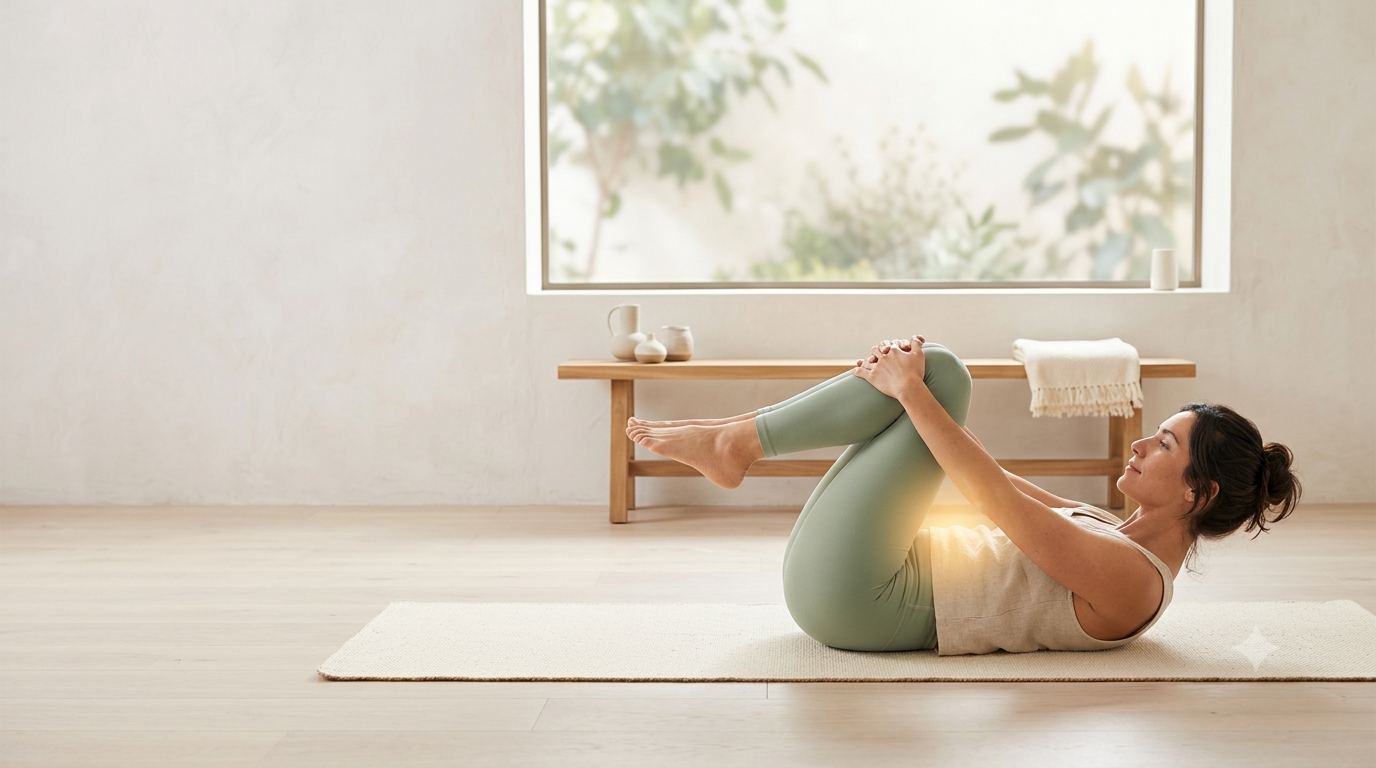
Apanasana (Knees-to-Chest Pose)
Apanasana is often included in gentle yoga routines focused on the abdomen. The pose brings your knees toward your chest, creating light compression around the belly.
How to do it:
- Lie comfortably on your back.
- Bend both knees and bring them toward your chest.
- Hold your knees or shins gently.
- Keep your shoulders relaxed.
- Breathe slowly for 20–30 seconds.
Don’t pull aggressively on your legs. The goal is gentle pressure, not discomfort.
Child’s Pose (Balasana)
Need something calming after a heavy meal? Child’s Pose is a simple option.
Kneeling and folding forward can gently relax the body while encouraging slow, controlled breathing. Relaxation matters because stress can affect the gut-brain connection, and yoga combines movement with breathing and relaxation.
How to do it:
- Kneel with your hips resting toward your heels.
- Fold your upper body forward.
- Extend your arms or rest them alongside your body.
- Let your forehead come toward the mat.
- Take five to ten slow breaths.
If your knees feel uncomfortable, place a cushion underneath them.
Cat-Cow Stretch (Marjaryasana-Bitilasana)
Cat-Cow is a gentle movement rather than a static pose. It alternates between rounding and extending the spine and can help get the whole body moving.
How to do it:
- Start on your hands and knees.
- Keep your hands beneath your shoulders and knees beneath your hips.
- Inhale as you gently lift your chest and tailbone.
- Exhale as you round your back.
- Repeat slowly for 5–10 rounds.
Focus on your breathing instead of rushing through the movement.
Seated Spinal Twist (Ardha Matsyendrasana)
Gentle twists are popular in yoga routines designed to stretch the torso and promote comfortable movement around the abdominal area.
Try this beginner-friendly version:
- Sit comfortably with your legs extended or crossed.
- Keep your spine tall.
- Place one hand behind you.
- Put the opposite hand on your knee.
- Slowly rotate your upper body.
- Hold for several comfortable breaths.
- Repeat on the other side.
Avoid forcing the twist. A mild stretch is enough.
Wind-Relieving Pose
As its name suggests, Wind-Relieving Pose (Pawanmuktasana) is commonly practiced as part of yoga routines aimed at the abdomen and digestion.
It resembles Knees-to-Chest Pose but can be practiced one leg at a time, making it easier to control the pressure.
How to do it:
- Lie on your back.
- Bring your right knee toward your chest.
- Hold it gently with both hands.
- Keep the other leg relaxed.
- Hold for several breaths.
- Switch sides.
- If comfortable, bring both knees toward your chest.
Keep the movement gentle, particularly if you’ve recently eaten.
Downward-Facing Dog (Adho Mukha Svanasana)
The downward-facing dog gets more of the body involved. It stretches the back, shoulders, and legs while encouraging you to coordinate movement with breathing.
Regular physical activity can support digestive health, and research summarised by Harvard Health suggests activities including yoga may help relieve symptoms associated with IBS, including bloating.
How to do it:
- Start on your hands and knees.
- Tuck your toes under.
- Lift your hips upward and backward.
- Keep your knees slightly bent if needed.
- Let your head relax between your arms.
- Take several slow breaths.
If you feel dizzy or uncomfortable, come down and rest.
Happy Baby Pose (Ananda Balasana)
Happy Baby is a gentle, playful pose that stretches the hips and lower back while keeping you close to the floor.
How to do it:
- Lie flat on your back.
- Bend your knees toward your chest.
- Hold the outside edges of your feet or your shins.
- Gently draw your knees toward your armpits.
- Keep your lower back comfortable.
- Breathe slowly for 20–30 seconds.
There’s no need to force your knees downward. Work within your natural range of motion.
How Can Yoga Help With Bloating?
Bloating is commonly linked to excess gas, constipation, eating too quickly, food intolerances and other digestive issues.
Gentle movement may help because physical activity can encourage the digestive system to keep moving. Cleveland Clinic notes that gentle exercise, including walking and yoga, may help relax the gut and move gas through the digestive system.
Still, yoga isn’t a guaranteed cure. Think of it as one simple tool that may complement healthy eating, hydration, regular movement and other habits that support digestion.
A Simple 10-Minute Anti-Bloating Yoga Routine
If you’re new to yoga, you don’t need a complicated sequence.
Try:
Child’s Pose → Cat-Cow → Knees-to-Chest → Seated Twist → Wind-Relieving Pose → Happy Baby
Spend around 1–2 minutes on each movement and keep your breathing slow. If something causes pain, stop rather than trying to push through it.
It’s also wise to avoid vigorous exercise immediately after a large meal. Give your body some time to digest and choose gentle movements instead.
Final Thoughts
Bloating can be frustrating, but a few minutes of gentle yoga may offer a simple way to get moving and relax. Apanasana, Child’s Pose, Cat-Cow, Seated Twists, Wind-Relieving Pose, Downward-Facing Dog and Happy Baby Pose are easy options to explore.
The key is consistency and comfort. Don’t force your body, breathe naturally and remember that yoga is meant to support your overall well-being—not replace medical care when symptoms persist.


