
Large Wall Art Ideas for Living Rooms With Empty Walls
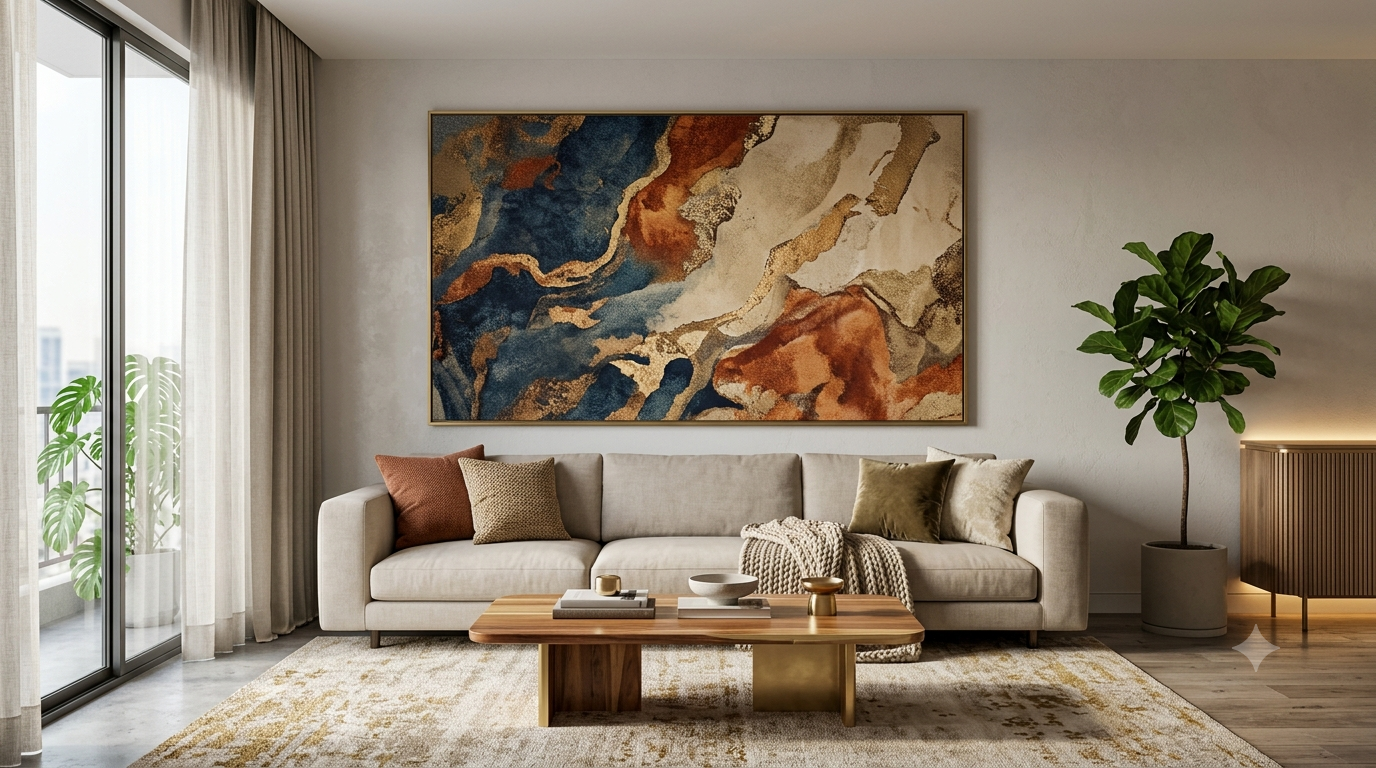
An empty living room wall can make an otherwise beautiful home feel strangely unfinished. You may have the perfect sofa, rug, lighting and coffee table, yet that large blank surface still seems to be asking, “What are you going to do with me?”
The good news? You don’t need to fill every inch. The right large wall art for a living room can instantly create a focal point, add personality and make the entire space feel more balanced. Interior design experts increasingly recommend using artwork at a scale that matches the room instead of relying on lots of tiny decorative pieces.
Whether your style is modern, traditional, minimalist or eclectic, here are some inspiring living room wall art ideas for those big, empty walls.
Make a Statement With Oversized Canvas Art
Sometimes, one impressive artwork is all a large wall needs.
An oversized canvas painting can become the visual centre of your living room without making the space look cluttered. Abstract art is especially versatile because it can introduce colour, movement and texture without dictating a particular theme.
For a contemporary home, consider abstract artwork in earthy neutrals, black and white, muted greens or warm terracotta. If your furniture is understated, a bold piece can provide the colour and character the room needs.
The key is scale. A small picture on a huge wall can look accidental, while a generously sized artwork feels intentional. Current interior-design advice similarly emphasises that oversized artworks work best when their proportions relate to the surrounding space.
Create a Gallery Wall
Don’t want to commit to one giant artwork? Create a gallery wall instead.
Combine several paintings, photographs, illustrations or art prints to create a curated display. This approach works particularly well on wide walls behind sofas, sideboards or console tables.
For a more sophisticated appearance, choose artwork that shares a common colour palette or theme. You can mix frame styles, but keep the overall arrangement balanced.
A gallery wall isn’t simply about putting lots of pictures together. Planning the layout and spacing beforehand helps the collection look like one intentional composition rather than a random collection of frames.
Try Large Indian Art for a Cultural Touch
For Indian homes, traditional and contemporary Indian artwork can bring warmth and personality to a living room.
Think Pichwai paintings, Madhubani art, Rajasthani-inspired artwork, folk art, Indian landscapes or modern interpretations of traditional motifs. These pieces can work beautifully with neutral sofas and natural wood furniture.
A large traditional artwork also gives guests something to notice and talk about. Instead of being just decoration, it can become part of your home’s story.
Use a Multi-Panel Canvas
A single rectangular painting isn’t your only option.
Multi-panel canvas art divides one visual composition across two, three or more panels. This creates a modern, architectural appearance and works particularly well on long horizontal walls.
A panoramic landscape, abstract design or botanical composition can stretch across the wall while maintaining a clean visual flow.
If your sofa is wide, a horizontal multi-panel arrangement can also help connect the artwork visually with the furniture below it.
Bring Nature Indoors With Botanical Wall Art
Large botanical prints are an easy way to soften an otherwise plain living room.
Oversized leaves, tropical plants, flowers and nature-inspired illustrations can introduce colour without overwhelming the space. Green botanical artwork works especially well with beige, cream, white, brown and wooden interiors.
You can also pair botanical wall art with real indoor plants to create a cohesive nature-inspired corner.
Choose Black-and-White Photography
Want something elegant and timeless?
Large black-and-white photography can be an excellent choice for an empty living room wall. Cityscapes, architectural photography, portraits, landscapes and abstract photography can all create a sophisticated focal point.
The limited colour palette also makes black-and-white art easy to coordinate with existing furniture.
For minimalist interiors, one large photograph may actually look better than several smaller decorative pieces because it gives the eye one clear place to land.
Add a Mirror With Artwork
A large wall doesn’t always have to be filled with paintings.
A statement mirror can reflect natural light and add depth to the room. You can also combine a large mirror with artwork, plants or a console table to create a layered wall arrangement.
This is particularly useful if the living room feels dark or visually compact. Designers frequently use mirrors and large-scale wall elements to draw attention upward and make a room feel more spacious.
Match Your Art to Your Furniture
Here’s a simple rule that can save you from expensive decorating mistakes: don’t choose artwork based on the wall alone.
Look at the furniture underneath it.
If you’re hanging art above a sofa, the artwork should generally feel proportionate to the sofa rather than appearing like a tiny island in a huge sea of wall space. A commonly used guideline is to aim for artwork spanning roughly two-thirds of the furniture’s width.
Also consider colours. Pull one or two shades from your cushions, rug or curtains and repeat them subtly in the artwork.
Don’t Be Afraid of Empty Space
Ironically, the answer to an empty wall isn’t always more decoration.
Negative space helps important pieces stand out. If you already have a large statement artwork, resist the temptation to surround it with dozens of accessories.
A well-chosen focal point with breathing room can make a living room feel calmer, cleaner and more expensive. Recent interior-design guidance also emphasises intentional styling and leaving enough negative space rather than filling every available surface.
How to Choose the Right Large Wall Art
Before buying anything, ask yourself three questions:
What is my living room style?
Modern rooms may suit abstract or geometric art, while traditional spaces can benefit from landscapes, portraits or Indian artwork.
What colours already exist in the room?
Your wall art doesn’t need to match everything, but it should feel connected to the existing palette.
How large is the wall?
Measure the available area before shopping. Large walls usually need appropriately scaled artwork or a thoughtfully planned collection—not a tiny frame floating in the middle.
Final Thoughts
A large empty wall is actually an opportunity. Instead of treating it as a decorating problem, think of it as a blank canvas for expressing your personality.
From oversized canvas art and gallery walls to Indian artwork, botanical prints, multi-panel designs and black-and-white photography, there are plenty of ways to make a living room wall feel complete.
The trick isn’t adding the most decoration. It’s choosing the right artwork, the right scale and the right placement.
After all, one beautiful piece that feels right can do more for your living room than ten random decorations ever could.


