
Hibiscus for Hair Growth: 7 Natural Remedies to Try at Home
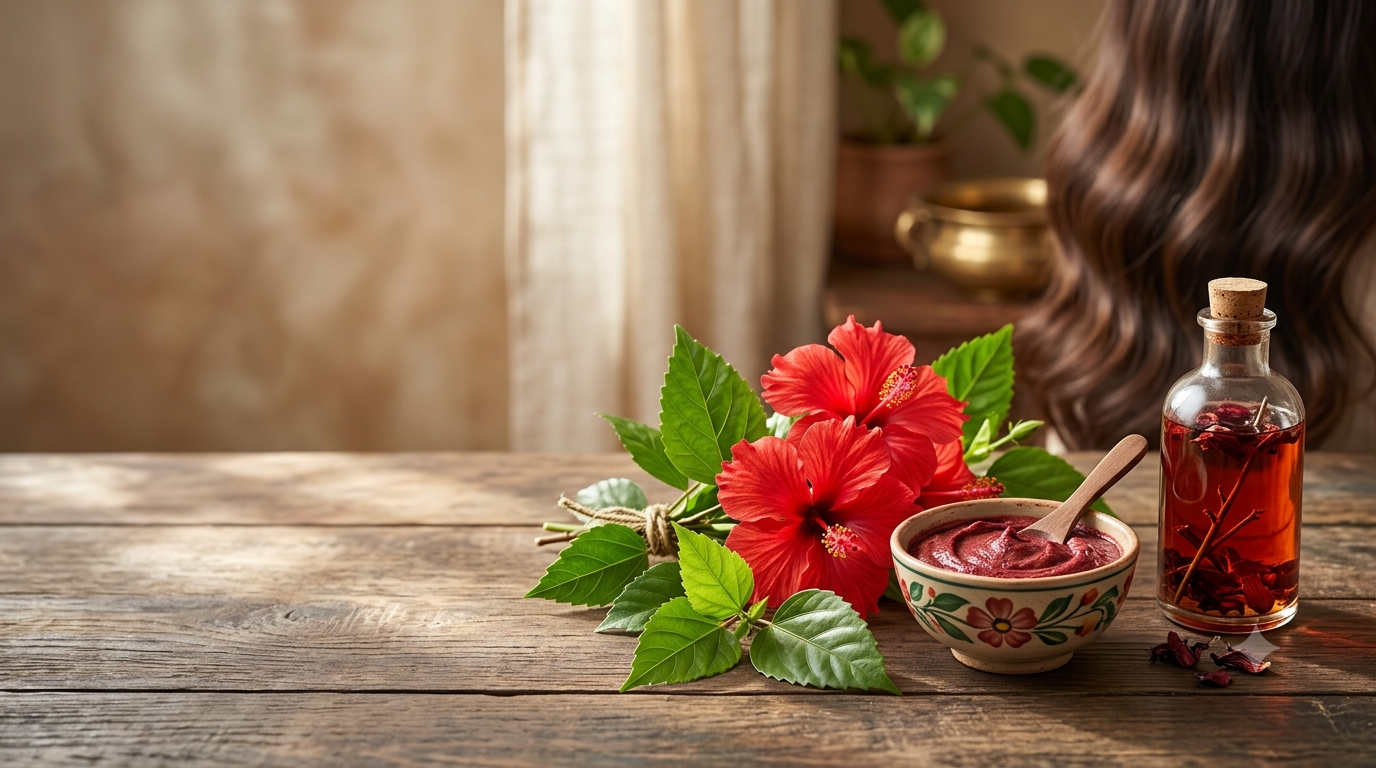
If your hair has been feeling dry, weak or unusually prone to breakage, your kitchen garden may have a surprisingly useful ingredient waiting for you: hibiscus.
Known as ‘gudhal’ in India, hibiscus has been part of traditional hair-care routines for generations. Its flowers and leaves are commonly used in homemade oils and hair packs because they can help condition the hair and support a healthier-looking scalp.
But does hibiscus actually help with hair growth? There is some promising research, although it is important not to treat it as a miracle cure. A 2003 experimental study found that extracts of Hibiscus rosa-sinensis showed hair-growth activity in laboratory and animal models, with leaf extract showing stronger activity than flower extract. However, good-quality human clinical evidence is still limited.
So, if you want to try hibiscus for hair growth, here are seven simple remedies you can make at home.
Hibiscus Hair Oil
A warm hibiscus oil massage is one of the easiest ways to add hibiscus to your routine.
How to make it:
- Take a handful of fresh hibiscus petals and leaves.
- Crush them into a coarse paste.
- Add the paste to about ½ cup coconut oil.
- Warm the mixture gently for a few minutes.
- Allow it to cool and strain.
Massage a small amount onto your scalp and leave it for around 30 minutes before shampooing.
The massage itself can also make your hair-care routine feel relaxing, while the oil helps reduce the dry, rough feeling of the hair.
Hibiscus and Aloe Vera Hair Mask
If your main concern is dry or frizzy hair, try combining hibiscus with aloe vera.
Blend hibiscus petals and leaves into a smooth paste and mix with fresh aloe vera gel. Apply the mixture to your scalp and hair lengths. Leave it on for around 30–40 minutes before rinsing thoroughly.
Aloe vera gives the mask a cooling, moisturising feel, while hibiscus adds a botanical boost. DIY dermatology guidance commonly recommends hibiscus-and-aloe masks as a conditioning treatment.
Hibiscus and Yoghurt Hair Pack
Yoghurt and hibiscus make a simple weekend hair pack.
Mix around 2–3 tablespoons of hibiscus paste with plain yogurt until you get a smooth consistency. Apply it from the scalp through the lengths and leave it on for approximately 20–30 minutes. Wash with a mild shampoo.
This remedy is particularly appealing if your hair feels rough or lacks softness.
Tip: If you have a sensitive scalp, test a small amount on your skin first.
Hibiscus and Amla Pack
Hibiscus and amla are a classic combination in Indian-inspired hair care.
Mix hibiscus powder with amla powder and enough water to create a spreadable paste. Apply it to the scalp and hair, leave it for about 20–30 minutes, and rinse thoroughly.
This is a good option when you want a simple herbal hair pack without using several ingredients.
Hibiscus and Fenugreek Mask
Have dandruff or a dry-feeling scalp? A hibiscus and fenugreek mask is another traditional option.
Soak fenugreek seeds overnight, grind them into a paste and combine them with crushed hibiscus leaves or flowers. Apply the mixture gently to the scalp and leave it for about 30 minutes before washing.
Fenugreek is frequently included in traditional hair-care recipes, while hibiscus gives the mask a smooth, plant-based texture. However, neither ingredient should be considered a proven treatment for a medical scalp condition.
Hibiscus Water Hair Rinse
Not every hair remedy needs to be a thick paste.
Boil a few cleaned hibiscus flowers and leaves in water. Let the liquid cool completely and strain it. After shampooing, pour the hibiscus water over your hair as a final rinse.
It is an uncomplicated way to experiment with hibiscus without leaving a heavy oil or mask on your scalp.
Hibiscus and Coconut Milk Hair Mask
For hair that feels particularly dry, try hibiscus with coconut milk.
Blend hibiscus petals into a paste and mix with a few tablespoons of coconut milk. Apply it to the scalp and hair lengths, leave it for around 20–30 minutes, and rinse well.
The creamy mixture can make the hair feel softer and easier to manage.
What Can Hibiscus Actually Do for Your Hair?
The biggest mistake is expecting hibiscus to suddenly make hair grow overnight.
Current evidence for hibiscus and hair growth is encouraging but not conclusive in humans. Research on plant-based hair-growth ingredients shows that many botanical extracts have demonstrated activity in laboratory or animal studies, but translating those results into reliable human treatments requires more clinical research.
In practical terms, hibiscus may be better viewed as a supportive hair-care ingredient rather than a guaranteed hair-loss treatment.
Regular conditioning and gentle scalp care may help your hair look healthier, while reducing dryness and breakage can help you retain more of the hair you already grow.
How Often Should You Use Hibiscus for Hair?
For most homemade hibiscus masks, once a week is a sensible place to start. If your scalp and hair tolerate it well, some people may use a simple treatment up to twice a week.
There is no need to overdo it. More frequent application does not automatically mean faster hair growth.
Also, always use clean ingredients and freshly prepared mixtures. Avoid leaving homemade masks on for excessively long periods.
Final Thoughts
From hibiscus hair oil and aloe vera masks to simple hibiscus-water rinses, there are plenty of easy ways to add this traditional ingredient to your hair-care routine.
The key is to keep expectations realistic. Hibiscus has interesting experimental evidence behind it, but stronger human studies are needed before it can be called a proven hair-growth treatment.
Think of it as a gentle addition to a consistent hair-care routine—not a magic solution. After all, healthy hair usually comes from small, regular habits rather than one overnight miracle.
For more natural beauty, wellness and lifestyle tips, keep following Trending Stories.


