
Boiled vs Fried Eggs: Which Is Healthier for Weight Loss?
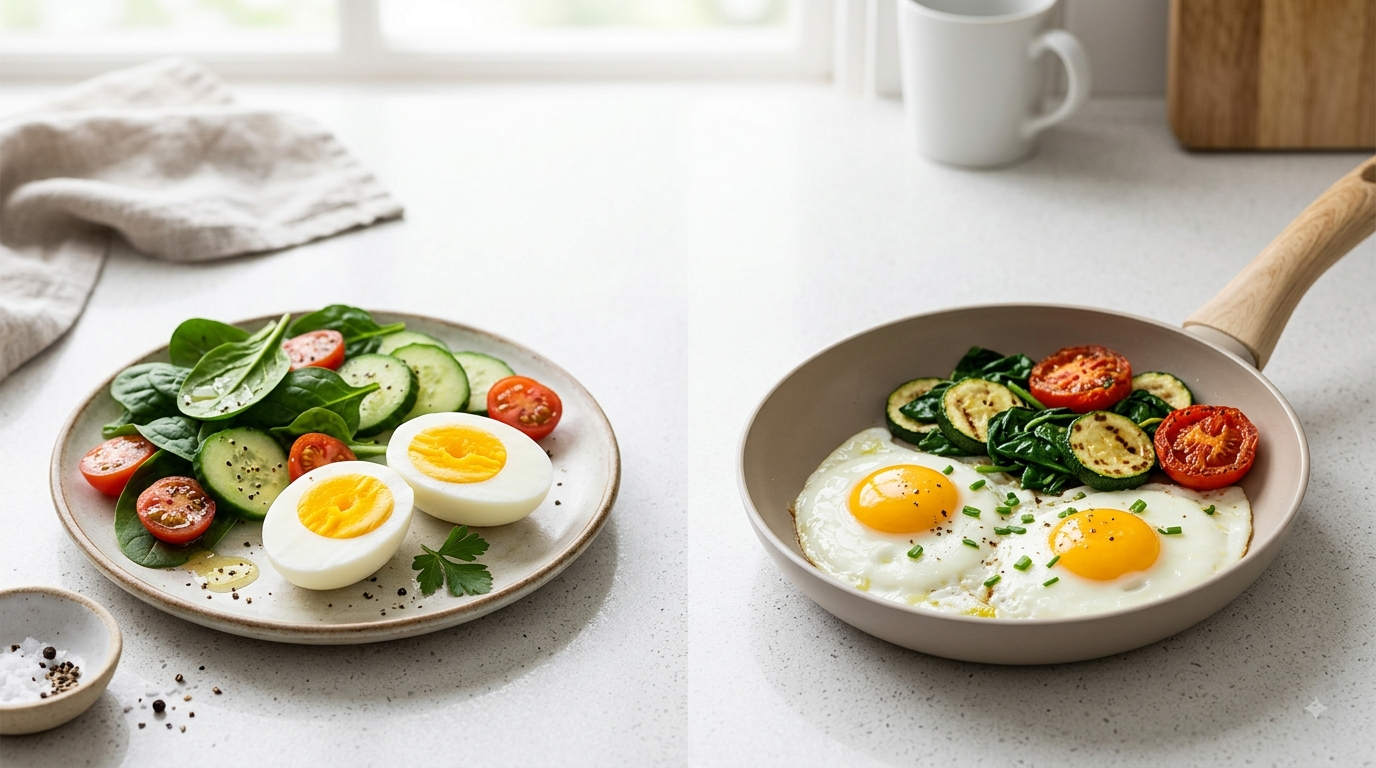
When you’re trying to lose weight, small food choices can make a surprisingly big difference. Eggs are often recommended because they’re filling, versatile, and packed with protein. But there’s one question many people ask: boiled vs fried eggs—which is healthier for weight loss?
The answer is fairly simple: boiled eggs are generally the better choice for weight loss because they provide protein and nutrients without requiring added cooking oil or butter. However, fried eggs can also fit into a healthy weight-loss diet when prepared with a small amount of healthy oil.
Let’s compare boiled and fried eggs to see which option works best for your goals.
Boiled vs Fried Eggs: What’s the Difference?
Both boiled and fried eggs start with the same basic ingredient, so their protein, vitamins, and minerals are naturally similar. The biggest nutritional difference usually comes from what you add during cooking.
A boiled egg is cooked in water without added fat. A fried egg, on the other hand, is usually cooked with oil, butter, or another cooking fat.
That extra fat can increase the total calorie content of the meal.
For people trying to lose weight, controlling overall calorie intake matters. That’s why boiled eggs often have an advantage.
Why Boiled Eggs Are Good for Weight Loss
High in Protein
Eggs are a convenient source of high-quality protein. Protein can help you feel fuller after eating and may make it easier to manage hunger between meals.
Starting your day with a protein-rich breakfast, such as boiled eggs with vegetables and whole-grain toast, can be a satisfying option.
No Added Cooking Oil
One of the biggest advantages of boiled eggs is that they don’t require cooking oil or butter.
This makes it easier to keep the calorie content predictable. If you’re tracking calories for weight loss, that simplicity can be useful.
Easy to Prepare
Boiled eggs can be prepared ahead of time and stored in the refrigerator. They’re convenient for breakfast, lunchboxes, salads, or a quick snack.
That convenience can also help you avoid reaching for highly processed snacks when hunger strikes.
Are Fried Eggs Bad for Weight Loss?
Not necessarily.
Fried eggs aren’t automatically unhealthy or unsuitable for weight loss. The main issue is how they’re cooked.
Frying an egg in a large amount of butter, ghee, or oil can significantly increase the calories in your meal. But using a small amount of cooking oil in a non-stick pan can keep the calorie increase relatively modest.
If you enjoy fried eggs, there’s no need to eliminate them completely. Instead, pay attention to portion sizes and cooking ingredients.
Boiled Eggs vs Fried Eggs: Which Has Fewer Calories?
A large boiled egg typically contains around 70–80 calories, depending on its size.
A fried egg starts with roughly the same calories from the egg itself, but the final calorie count depends on how much oil or butter is absorbed during cooking.
For example, frying an egg with a teaspoon of oil adds roughly 40 calories from the oil alone.
That’s why boiled eggs are usually the lower-calorie choice.
However, the difference becomes less important if you’re using only a small amount of oil and your overall diet remains balanced.
Which Egg Is Better for a Weight-Loss Breakfast?
If your main priority is keeping calories under control, boiled eggs are an easy winner.
Try pairing two boiled eggs with:
- A bowl of fresh vegetables
- Whole-grain toast
- Fruit
- A small serving of avocado
- Unsweetened tea or coffee
This combination provides protein, fiber, and other nutrients that can make breakfast more satisfying.
Prefer fried eggs? That’s fine too. Cook them with a small amount of oil and pair them with vegetables rather than calorie-dense processed foods.
Don’t Forget the Rest of Your Diet
Here’s something important: eating boiled eggs alone won’t cause weight loss.
Weight loss depends largely on maintaining a calorie deficit over time, while getting enough protein, fiber, vitamins, minerals, and other essential nutrients.
Your overall eating pattern matters much more than whether an egg was boiled or fried.
For example, a boiled egg served alongside sugary drinks, pastries, and highly processed foods isn’t necessarily a better overall meal than a lightly fried egg served with vegetables and whole grains.
Think about the complete plate—not just the cooking method.
Boiled vs Fried Eggs: The Final Verdict
So, boiled vs fried eggs—which is healthier for weight loss?
Boiled eggs generally have the edge because they contain no added cooking fat and are easy to include in a calorie-controlled diet. They’re also convenient, filling, and nutrient-rich.
But fried eggs can absolutely be part of a healthy weight-loss plan. The key is to control the amount and type of cooking fat you use.
Ultimately, the best egg preparation is the one that fits your calorie needs, nutritional goals, and eating preferences.
Frequently Asked Questions
Q1 – Are boiled eggs better than fried eggs for weight loss?
Generally, yes. Boiled eggs don’t require added oil or butter, making them easier to include in a calorie-controlled diet.
Q2 – Can I eat fried eggs while trying to lose weight?
Yes. Use a small amount of oil and pay attention to the rest of your meal and daily calorie intake.
Q3 – How many eggs can I eat for weight loss?
There isn’t one ideal number for everyone. Your overall diet, calorie needs, protein requirements, and health goals should be considered. If you have specific dietary or medical concerns, consult a qualified healthcare professional.
Q4 – Are eggs good for breakfast during weight loss?
Yes. Eggs provide protein and can be part of a filling, balanced breakfast. Pair them with vegetables, fruit, or whole grains for a more nutritious meal.


