
Mysterious Temples of India: 9 Sites and the Stories Behind Them
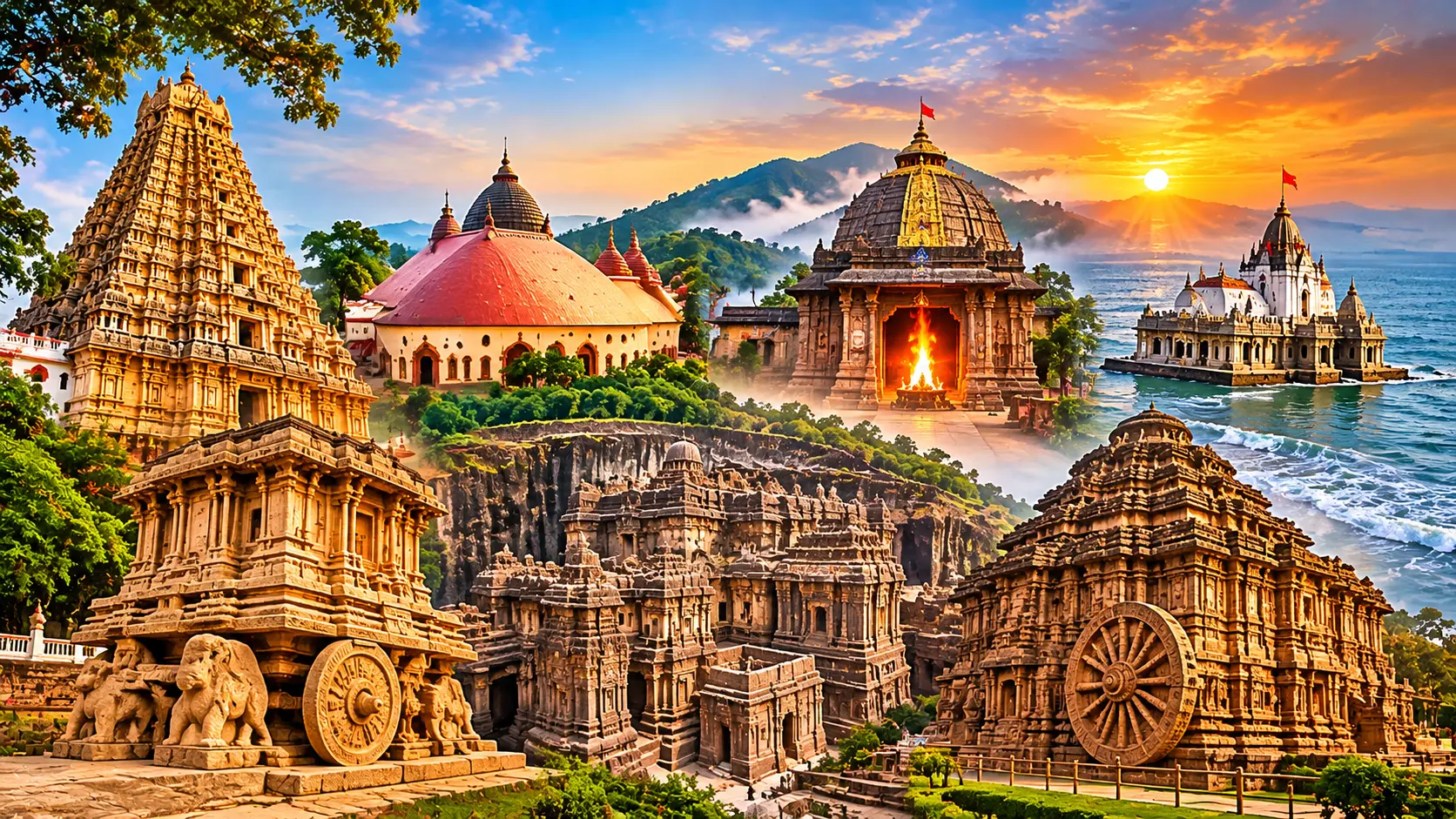
India is a land where history, spirituality, and mystery often come together. Hidden in ancient cities, surrounded by mountains or standing close to the sea, some of the country’s most fascinating temples have stories that continue to capture people’s imagination.
Some are famous for unusual architectural designs, others for centuries-old rituals, mysterious natural phenomena, and legends passed down through generations. From a temple that disappears beneath the sea during high tide to a shrine associated with an annual goddess festival, these places offer much more than a religious experience.
But what makes these temples so fascinating? Are their mysteries connected to ancient engineering, natural phenomena, or simply the power of faith?
Let’s explore nine mysterious temples in India and the fascinating stories behind them.
Padmanabhaswamy Temple, Kerala – The Mystery of the Sealed Vault
Located in Thiruvananthapuram, the Sree Padmanabhaswamy Temple is one of India’s most fascinating religious landmarks. Dedicated to Lord Vishnu, the temple became internationally famous following the discovery of enormous treasures in its underground vaults.
The discovery attracted worldwide attention, but one particular chamber, popularly known as Vault B, became the center of speculation and legends. Stories about its sealed entrance, mysterious symbols, and supposed supernatural protection have circulated for years.
While the temple’s treasures and history are documented, many stories surrounding the sealed vault remain unverified. The temple continues to attract devotees, historians, and curious visitors.
Kamakhya Temple, Assam – The Goddess and the Ambubachi Mela
Situated on Nilachal Hill in Guwahati, the Kamakhya Temple is among the most important Shakti Peethas in India.
What makes this temple particularly unusual is its association with female fertility and the annual Ambubachi Mela. According to religious tradition, Goddess Kamakhya undergoes her annual menstrual cycle during this period.
The temple remains closed for three days, and devotees gather in large numbers when it reopens.
Unlike many temples where traditional idol worship is central, Kamakhya is particularly associated with the worship of the goddess through a natural stone formation representing the yoni.
The festival also carries a wider cultural message, recognizing menstruation as a natural and sacred aspect of life.
Lepakshi Veerabhadra Temple, Andhra Pradesh – The Hanging Pillar
Imagine visiting a temple and discovering a stone pillar that appears to float just above the floor.
That is precisely what makes the Veerabhadra Temple at Lepakshi so fascinating.
Built during the Vijayanagara period, the temple is famous for its remarkable sculptures, murals, and architectural craftsmanship. Among its many pillars, one has a visible gap beneath part of its base, allowing a thin piece of cloth to pass underneath.
This unusual feature has inspired stories about ancient engineering and construction techniques.
Some popular accounts claim that a British engineer attempted to move the pillar, but the story lacks reliable historical confirmation.
The temple also has a connection to the Ramayana. Local tradition associates Lepakshi with Jatayu, the mythical bird who fought Ravana while attempting to rescue Sita.
Konark Sun Temple, Odisha—The Mystery of the Giant Stone Chariot
The Konark Sun Temple is one of India’s greatest architectural achievements. Built in the 13th century, this UNESCO-recognized monument was designed in the form of a gigantic chariot dedicated to the Sun God.
Its structure features 24 intricately carved wheels and seven stone horses, symbolizing the movement of the sun across the sky.
One of the most popular legends surrounding Konark involves powerful magnets and an idol supposedly suspended in mid-air. Although this story continues to attract attention, there is no established archaeological evidence confirming the floating idol.
What is historically remarkable is the temple’s sophisticated stonework, iron construction elements, and astronomical symbolism.
Even in its ruined condition, Konark remains an extraordinary reminder of India’s medieval architecture.
Jwalamukhi Temple, Himachal Pradesh – The Eternal Flames
Unlike temples where devotees worship traditional stone or metal idols, the Jwalamukhi Temple in Kangra district is famous for its naturally occurring flames.
The temple is dedicated to Goddess Jwalamukhi, and several flames emerge from openings in the rocky ground within the shrine.
Devotees believe these flames represent the eternal presence of the goddess. They have remained an important part of the temple’s religious traditions for generations.
From a geological perspective, natural gas escaping through underground rock formations can produce persistent flames.
However, for devotees, the experience carries a much deeper spiritual meaning.
The combination of natural geology and religious belief makes Jwalamukhi one of India’s most intriguing pilgrimage destinations.
Jagannath Temple, Puri, Odisha – The Traditions That Fascinate Visitors
The Jagannath Temple in Puri is one of the most important pilgrimage sites in India. Dedicated to Lord Jagannath, the temple is particularly famous for the annual Rath Yatra, during which enormous decorated chariots carry the deities through the streets.
Several unusual stories surround the temple.
One popular belief concerns the temple flag, which devotees say appears to flutter against the direction of the wind. Other stories mention the temple’s unusual food traditions and the belief that the sacred Mahaprasad is prepared in a remarkable sequence of earthen pots.
The temple’s rituals, architecture, and centuries-old traditions make it a fascinating destination.
Rather than treating every popular claim as a scientific mystery, it is worth appreciating the cultural and spiritual significance behind these traditions.
Kailasa Temple, Ellora, Maharashtra—Carved From a Single Rock
The Kailasa Temple at Ellora is perhaps one of the most astonishing examples of ancient Indian rock-cut architecture.
Dedicated to Lord Shiva, the temple was carved out of a single basalt rock formation during the Rashtrakuta period, generally associated with the eighth century.
What makes it extraordinary is its construction technique. Instead of assembling individual stones to create a building, artisans excavated the surrounding rock to reveal the temple from top to bottom.
The complex includes enormous pillars, sculptures, courtyards, and detailed carvings.
Popular legends sometimes suggest that such a massive structure could not have been created by ordinary human hands. However, its real story is even more impressive: it demonstrates the planning, patience, and technical skill of ancient Indian craftsmen.
Brihadeeswara Temple, Tamil Nadu – The Engineering Marvel of Thanjavur
Standing proudly in Thanjavur, the Brihadeeswara Temple is a magnificent example of Chola architecture.
Built by Rajaraja Chola In the early 11th century, the temple is dedicated to Lord Shiva and is recognized as part of UNESCO’s Great Living Chola Temples.
Its towering vimana, massive granite construction, and impressive sculptures have fascinated historians and architecture enthusiasts for generations.
One popular mystery concerns the enormous capstone placed at the top of the temple tower. Stories describe how ancient builders supposedly transported and positioned this massive stone without modern machinery.
The exact construction methods continue to attract interest, but the monument demonstrates the remarkable engineering capabilities of the Chola period.
It is a reminder that India’s architectural achievements were centuries ahead of their time.
Stambheshwar Mahadev Temple, Gujarat – The Temple That Disappears Into the Sea
If there is one temple that offers visitors a truly unusual natural spectacle, it is the Stambheshwar Mahadev Temple in Gujarat.
Located near Kavi Kamboi village, this small Shiva temple stands close to the Arabian Sea and is affected by the region’s tidal movements.
During high tide, seawater surrounds and submerges much of the temple. As the water recedes, the shrine becomes visible again.
This natural phenomenon has earned it the popular description of a disappearing temple.
The experience is particularly fascinating because the temple’s visibility changes with the tides.
Visitors should check local tide timings before planning a trip and follow safety instructions around the coastal area.
Why Are India’s Ancient Temples Still Full of Mysteries?
India’s temples are more than places of worship. They represent centuries of architectural development, cultural traditions, astronomy, craftsmanship, and religious beliefs.
Many unusual features that appear mysterious today may have explanations rooted in ancient engineering or natural science. Others are connected to folklore and traditions that have been preserved through generations.
The most interesting approach is to appreciate both sides: the historical achievements and the cultural beliefs that make these places meaningful.
Final Thoughts
From the naturally occurring flames of Jwalamukhi to the remarkable rock-cut architecture of Kailasa Temple, India’s mysterious temples offer countless reasons to explore the country’s rich heritage.
Each temple has a story worth discovering. Some stories are supported by historical records, some are religious traditions, and others remain popular legends.
Perhaps that is what makes these destinations so special. They remind us that India’s past is not simply something to read about in history books. It is still visible in its monuments, rituals, architecture, and living traditions.
Which of these nine mysterious temples would you like to visit first? Share your thoughts and explore more fascinating stories about India’s history, culture, and heritage with Trending Stories.
Frequently Asked Questions (FAQs) About Mysterious Temples of India
- Which is the most mysterious temple in India?
The Padmanabhaswamy Temple in Kerala is often considered one of India’s most mysterious temples because of its enormous underground treasures and the legends surrounding its sealed Vault B. Other fascinating examples include Kamakhya Temple and Lepakshi Veerabhadra Temple. - Which temple in India disappears underwater?
The Stambheshwar Mahadev Temple in Gujarat is famous for disappearing beneath seawater during high tide. When the tide recedes, the temple becomes visible again, creating a remarkable natural spectacle. - Which temple in India has a hanging pillar?
The Veerabhadra Temple at Lepakshi in Andhra Pradesh is famous for its hanging pillar. A small gap beneath the pillar allows a thin piece of cloth or paper to pass through, making it an extraordinary example of ancient architectural craftsmanship. - Why is Kamakhya Temple in Assam considered mysterious?
Kamakhya Temple is associated with the annual Ambubachi Mela, which celebrates the traditional belief that Goddess Kamakhya undergoes her menstrual cycle. The temple closes for three days and reopens after the festival, attracting thousands of devotees. - Which Indian temple is famous for its eternal flames?
The Jwalamukhi Temple in Himachal Pradesh is famous for natural flames emerging from openings in the rocky ground. Devotees worship these flames as manifestations of Goddess Jwalamukhi. - Which ancient Indian temple was carved from a single rock?
The Kailasa Temple at Ellora in Maharashtra was excavated from a single massive basalt rock formation. Its remarkable architecture and detailed carvings make it one of India’s greatest rock-cut monuments. - Are the mysteries of Indian temples scientifically explained?
Some unusual temple features have scientific or architectural explanations, such as natural gas flames, tidal movements and ancient construction techniques. Others are based on religious beliefs, folklore and historical traditions that remain part of India’s cultural heritage. - What is the best time to visit India’s mysterious temples?
The ideal visiting season depends on the location. October to March is generally comfortable for visiting many temples across India. However, visitors should check local weather, festival schedules, temple opening hours and travel restrictions before planning their journeys.


