
Inspiring Story of Tulsi Gowda: India’s “Encyclopedia of Forests”
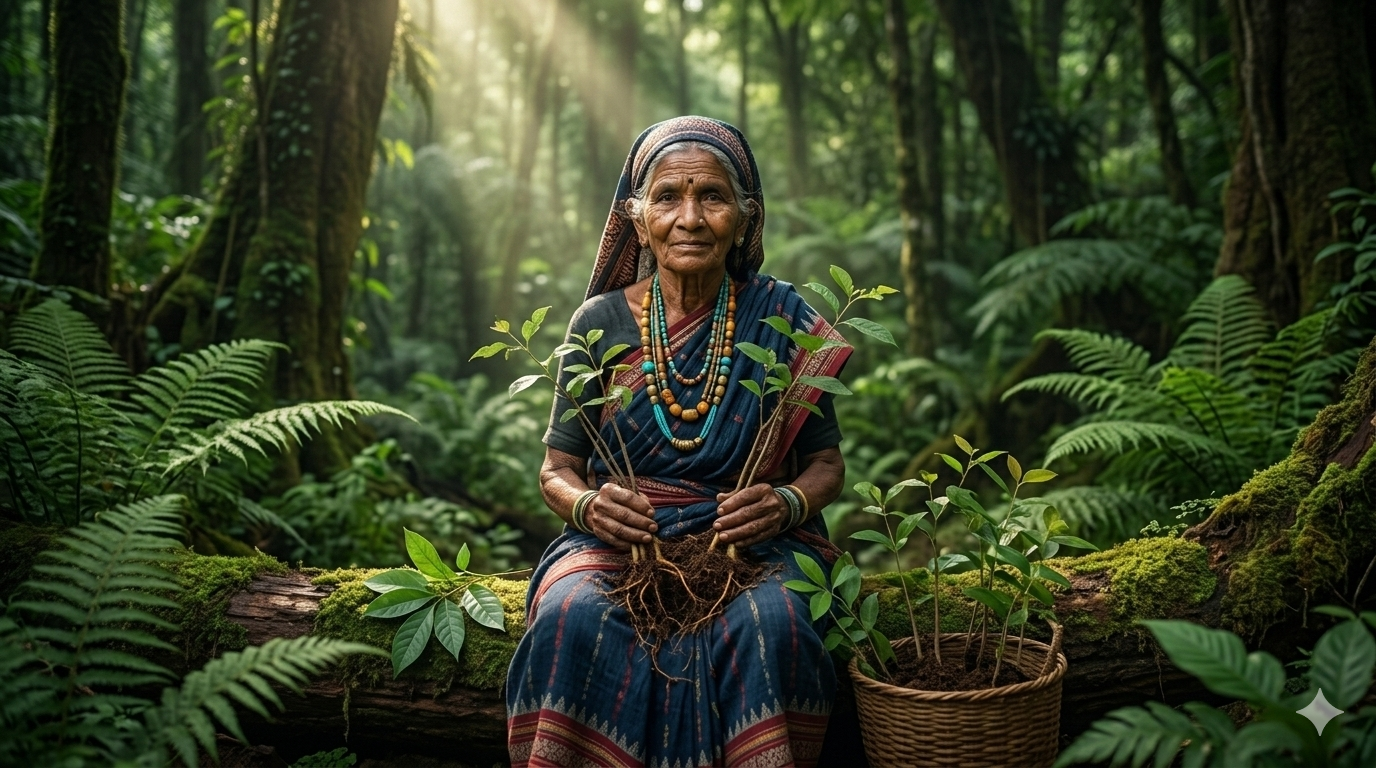
In a world where environmental conservation often depends on scientific research and technology, one woman from rural India has proven that deep knowledge of nature can come directly from experience. The inspiring story of Tulsi Gowda, often called India’s “Encyclopedia of Forests,” is a remarkable journey of dedication, wisdom, and love for nature.
Without formal education, Tulsi Gowda became one of India’s most respected environmentalists, known for her extraordinary understanding of forests, plants, and ecological balance. Her life story is not just inspiring—it is a powerful reminder that knowledge can grow from the soil itself.
Early Life: A Humble Beginning in the Forests
Tulsi Gowda was born in the Uttara Kannada district of Karnataka, into a tribal family belonging to the Halakki Vokkaliga community.
Her childhood was filled with hardships. After losing her father at a young age, she had to start working early to support her family. She never attended school and remained illiterate throughout her life.
But what she lacked in formal education, she made up for with an extraordinary connection to nature.
Growing up around forests, she developed a natural understanding of plants, trees, and seeds. Over time, this curiosity transformed into deep ecological knowledge that even trained scientists admire today.
A Lifetime Dedicated to Forest Conservation
Tulsi Gowda began working with the forest department at a very young age. Over the decades, she has planted and nurtured more than 30,000 trees across different parts of Karnataka.
Her ability to identify plant species, understand soil conditions, and determine the right season for planting is considered exceptional.
Many forest officials and researchers often consult her because she can identify plant varieties simply by looking at seeds or leaves. This rare skill is why she earned the nickname “Encyclopedia of Forests.”
Her work primarily focuses on:
- Seed collection and preservation
- Forest regeneration
- Plantation and nurturing of saplings
- Promoting biodiversity
Through decades of dedication, she has played a major role in protecting the fragile ecosystems of Karnataka’s forests.
Recognition at the National Level
For many years, Tulsi Gowda worked quietly without expecting recognition. However, her contribution to environmental conservation eventually gained national attention.
In 2021, the Government of India honored her with the prestigious Padma Shri, one of the country’s highest civilian awards.
During the award ceremony, she captured the hearts of millions across the nation. Walking barefoot and dressed in her traditional attire, Tulsi Gowda represented simplicity, humility, and a lifelong commitment to nature.
Her presence at the ceremony reminded everyone that true heroes often come from the most unexpected places.
Why Tulsi Gowda is Called the “Encyclopedia of Forests”
The title “Encyclopedia of Forests” perfectly reflects Tulsi Gowda’s extraordinary knowledge.
Despite having no formal education, she possesses deep expertise in:
- Identifying hundreds of plant species
- Understanding seed germination patterns
- Predicting rainfall patterns and soil conditions
- Recognizing medicinal plants used by tribal communities
Her knowledge has been passed down through generations of indigenous traditions combined with years of hands-on experience in the forest.
For researchers and environmentalists, Tulsi Gowda represents the importance of traditional ecological knowledge, which is often overlooked in modern environmental discussions.
Lessons from Tulsi Gowda’s Life
The story of Tulsi Gowda offers valuable lessons for people across the world.
1. Knowledge Doesn’t Always Come from Books
Tulsi Gowda proves that wisdom can come from observation, experience, and a strong connection with nature.
2. Protecting Nature is Everyone’s Responsibility
Her life shows that environmental conservation is not limited to scientists or policymakers. Anyone can contribute to protecting forests and biodiversity.
3. Simplicity and Dedication Create Real Impact
Without seeking fame or recognition, Tulsi Gowda spent decades planting trees and protecting nature. Her dedication eventually inspired millions.
A Living Inspiration for Future Generations
The life of Tulsi Gowda reminds us that true environmental heroes don’t always wear lab coats or hold academic degrees.
Sometimes, they walk barefoot through forests, carrying seeds and nurturing life with their hands.
Her journey from a tribal village in Karnataka to receiving the Padma Shri is a powerful symbol of dedication, humility, and love for nature.
Today, Tulsi Gowda stands as a beacon of inspiration for environmentalists, nature lovers, and young generations who dream of making a difference in the world.
Her story proves that one person’s commitment to nature can grow into a legacy that benefits generations to come.


