
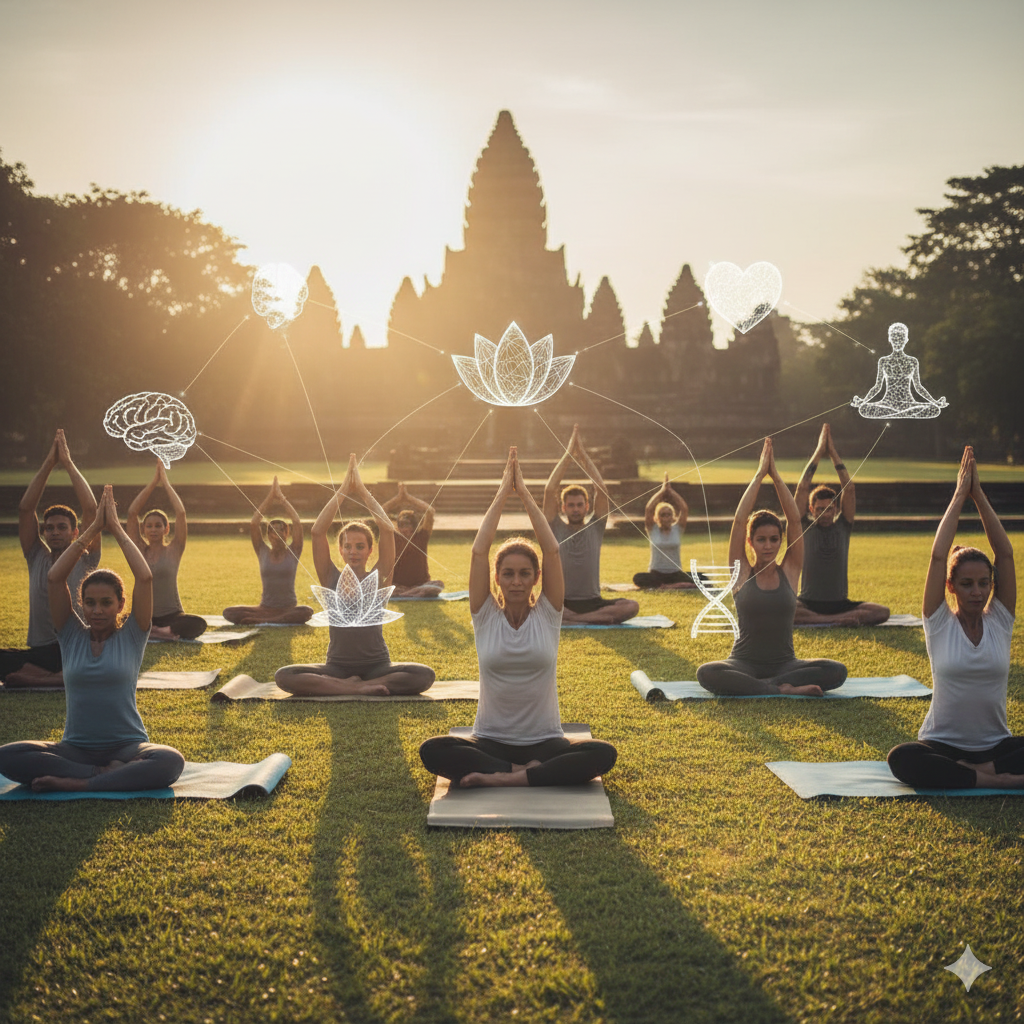
Celebrating International Yoga Day: Embracing Peace and Wellness
Every year on June 21st, the world collectively takes a deep breath. From Times Square in New York to the serene ghats of Varanasi, millions gather to unroll their mats and salute the sun, marking International Yoga Day.
This day is more than just a calendar event; it’s a global affirmation of an ancient practice that offers something profoundly needed in our fast-paced modern lives: a bridge between the body and the mind, and a pathway to holistic wellness.
In a world buzzing with stress and digital noise, yoga offers an anchor. It’s not just about complex poses (asanas); it’s about mindful movement, controlled breathing (pranayama), and deep introspection. If you’ve ever considered starting yoga or needed a reason to rekindle your practice, International Yoga Day is the perfect global nudge.
Let’s dive into why this golden practice has captured the global imagination and how it can fundamentally transform your health, body, and spirit.
The Global Recognition and Ancient Roots
The journey of International Yoga Day is a fascinating story of cultural diplomacy and universal acceptance. Recognized by the United Nations in 2014, the date—June 21st—was chosen because it is the Summer Solstice, the longest day of the year in the Northern Hemisphere, holding special significance in many parts of the world.
Yoga itself is not new; it’s a 5,000-year-old discipline originating in India. It was developed not as a form of exercise, but as a system for spiritual growth and self-realization. Today, it has adapted beautifully to serve the needs of the 21st-century human, offering tangible solutions for modern ailments like chronic stress and sedentary living. This day reminds us that this powerful tradition is a gift to the entire world, transcending borders, religions, and ages.
Physical Transformation: Strength, Flexibility, and Posture
When most people think of yoga, they think of the physical poses. And while those poses might look challenging, their benefits are deeply practical.
Consistent practice fundamentally alters your physical structure. It doesn’t just stretch your hamstrings; it strengthens the deep stabilizer muscles often neglected by standard gym workouts. This balance of strength and flexibility is key to injury prevention and maintaining mobility as we age.
Furthermore, yoga is a master posture corrector. Hours spent hunched over computers lead to chronic back, neck, and shoulder pain. Poses like Tadasana (Mountain Pose) and Bhujangasana (Cobra Pose) actively work to realign the spine and strengthen the core, counteracting the effects of gravity and bad habits. Better posture doesn’t just look good—it improves confidence and even aids breathing!
The Stress Warrior: Calming the Nervous System
In today’s high-pressure environment, the greatest benefit of yoga might be its profound impact on mental wellness. Yoga is essentially a tool for managing the fight-or-flight response.
Through deliberate, slow movements coordinated with deep breathwork, yoga forces your body into a state of rest and digest (the parasympathetic nervous system). This regulation leads to a natural reduction in cortisol (the stress hormone). Regular practice has been shown in clinical studies to significantly reduce symptoms of anxiety, mild depression, and chronic tension.
It’s not magic; it’s biochemistry driven by breath. By focusing intently on the present moment, you give your mind a break from worrying about the past or future—the essence of mindfulness.
The Power of Breath: Internal Health and Detox
The physical postures are only half the story. Pranayama, the science of breath control, is the true engine of yoga.
Your breath is the most powerful tool you have for instantaneous health regulation. Techniques like Anulom Vilom (Alternate Nostril Breathing) and Kapalabhati (Skull Shining Breath) are potent detoxifiers. They maximize oxygen intake, helping to flush toxins from the blood and improve overall circulation.

This enhanced oxygenation benefits every organ, especially the digestive system. Many twists and forward folds in yoga help stimulate the digestive organs, ensuring optimal nutrient absorption and waste elimination. If you suffer from sluggish digestion or bloating, incorporating these internal cleansing practices can provide immense relief.
Embracing Mindfulness: The Philosophy of Union
The word ‘yoga’ itself means ‘to yoke’ or ‘union.’ It refers to the union of the individual consciousness with the universal consciousness, or, more simply, the union of the body, breath, and mind.
This philosophy encourages a non-judgmental awareness of the self. By tuning in to how your body feels during a pose, or how your breath moves through your lungs, you cultivate mindfulness. This skill extends far beyond the mat, allowing you to react to life’s challenges with greater clarity, patience, and emotional balance.
Making Yoga a Daily Practice
International Yoga Day is the perfect prompt to start your journey. Remember, yoga is accessible to everyone, regardless of age, fitness level, or flexibility.
Start small:
- Five Minutes of Meditation: Begin and end your day sitting quietly, simply observing your breath.
- Sun Salutations (Surya Namaskar): Learn this foundational sequence. It’s a complete workout and meditation in twelve simple steps.
- Find Your Style: Whether it’s the dynamic Vinyasa, the gentle Hatha, or the restorative Yin, there is a yoga style perfect for your current needs.
Celebrate this International Yoga Day by giving yourself the gift of presence, strength, and inner peace. Your body and mind will thank you for unrolling that mat!
Tags: #YogaDay #Wellness #HolisticHealth #Fitness #Mindfulness #Meditation #TrendingStories
