
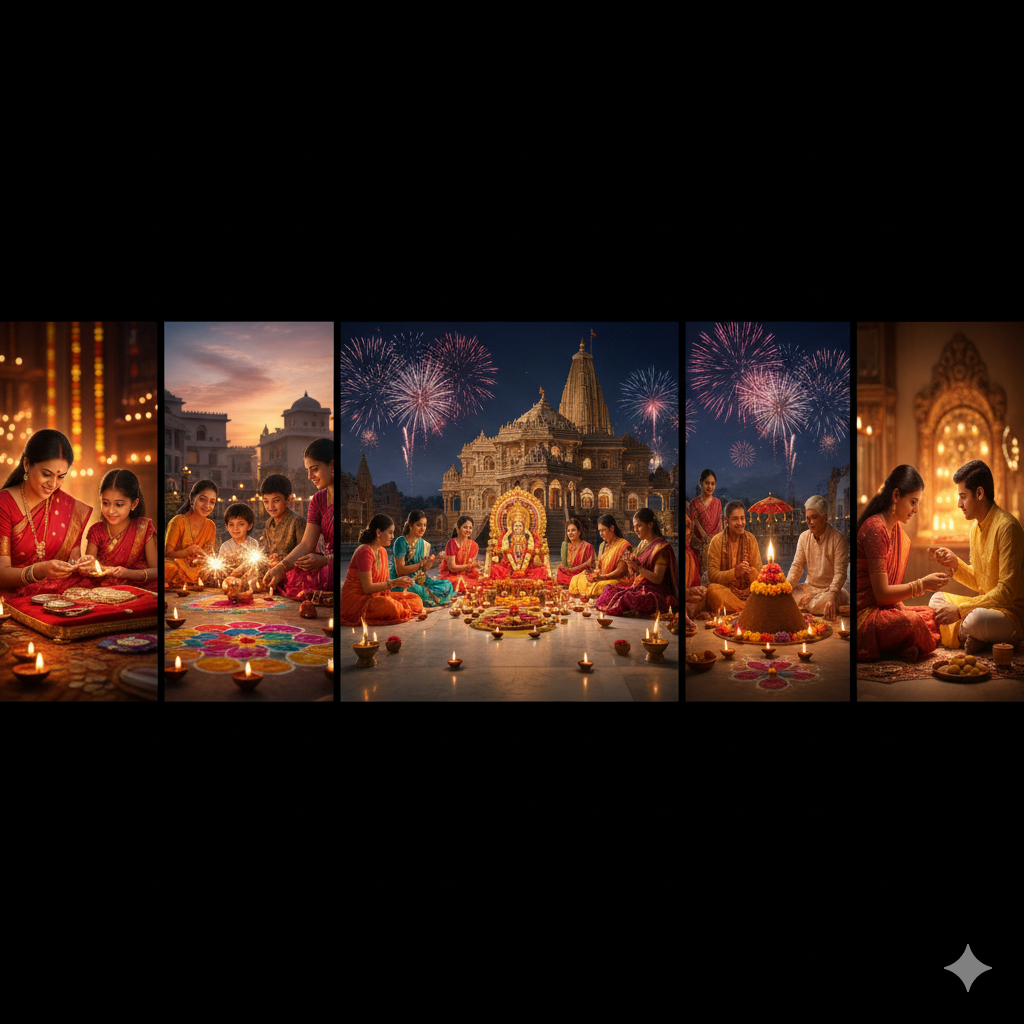
The Five Days of Diwali: Light, Faith, and the Soul of Sanatan Dharma
As the air turns crisp and the nights stretch longer, the soft glow of diyas begins to appear in every Indian home. The scent of ghee, marigolds, and incense fills the air. It’s that time again — Diwali, the festival of lights.
But Diwali isn’t just one day of celebration. In Sanatan Dharma, it unfolds over five sacred days, each carrying deep meaning, mythological stories, and spiritual wisdom. Together, they guide us from cleansing and gratitude to devotion and renewal — a journey from darkness to light, both outside and within.
Let’s walk through these five days — not just as rituals, but as living lessons from our timeless tradition.
Day 1: Dhanteras – Inviting Prosperity with Purity
Diwali begins with Dhanteras, when homes are scrubbed, lamps are lit, and families buy gold, silver, or utensils. But the essence of Dhanteras goes far beyond shopping or decoration — it’s about preparing our minds and spaces for abundance.
According to the Puranas, during the Samudra Manthan (the churning of the cosmic ocean), Goddess Lakshmi emerged carrying a pot of gold, symbolizing divine wealth. Alongside her appeared Dhanvantari, the celestial healer, with a pot of Amrit, the nectar of immortality.
That’s why Dhanteras is also connected with health and well-being, not just riches. The message is simple yet profound: true prosperity begins with purity — of home, of mind, and of heart. When we clean our surroundings, we symbolically clean the clutter within.
Light the first diya of Diwali not just for wealth, but for wellness.
Day 2: Naraka Chaturdashi – Lighting the Darkness Within
The next morning is Naraka Chaturdashi, also called Chhoti Diwali. It commemorates Lord Krishna’s victory over the demon Narakasura, who had imprisoned thousands of innocent souls. With the help of his consort Satyabhama, Krishna destroyed the demon and freed the captives, and the people celebrated by lighting lamps at dawn.
This story isn’t just about good triumphing over evil — it’s about conquering the darkness within us.
“Naraka” literally means hell, and the day reminds us that greed, anger, and ego are the real demons that trap us. The early morning oil bath taken on this day represents cleansing not just of the body, but of the spirit.
So, as we light diyas on Chhoti Diwali, we’re also lighting up the corners of our inner world where fear or pride may still linger.
Day 3: Lakshmi Pujan – The Night of Divine Illumination
The third day — and the most celebrated — is Lakshmi Pujan. This is the night when every lamp matters. Homes glitter with rows of diyas, rangolis brighten doorsteps, and prayers fill the air as families welcome Goddess Lakshmi, the deity of wealth, beauty, and abundance.
Mythology tells us this is also the night when Lord Rama, Sita, and Lakshmana returned to Ayodhya after 14 years of exile and the defeat of Ravana. The people of Ayodhya, overjoyed, lit lamps to guide them home — and thus began the tradition of lighting diyas on Diwali night.
But Lakshmi doesn’t enter a home full of noise or negativity. She is drawn to calm, clean, and grateful spaces — physical and emotional. The lamp we light on Diwali night symbolizes the light of wisdom that dispels ignorance.
So as you perform Lakshmi Pujan, let each diya remind you that real wealth is not just gold or success — it’s grace, gratitude, and peace.
Day 4: Govardhan Puja – Gratitude to Nature and the Divine
The morning after Diwali is Govardhan Puja, also known as Annakut. This day celebrates Lord Krishna’s act of lifting the Govardhan mountain on his little finger to shelter the people of Gokul from the angry storms sent by Lord Indra.
Krishna’s message was crystal clear: nature, which nourishes us, deserves our worship more than pride or power. In villages and temples, devotees prepare an Annakut — a grand feast of grains, sweets, and vegetables — symbolizing gratitude for the Earth’s bounty.
In many homes, small Govardhan mounds made of cow dung or mud are decorated and worshipped. It’s a gentle reminder that divinity isn’t somewhere far away — it’s right here, in the soil, in food, in every act of kindness and service.
When we honor Govardhan, we honor the sustainer — the divine presence that holds us all together.
Day 5: Bhai Dooj
Celebrating the Bond of Love
The final day of Diwali is Bhai Dooj, a heartwarming celebration of the bond between brothers and sisters. Its roots trace back to the story of Yamraj, the god of death, who visited his sister Yamuna on this day. She welcomed him with love, applied a tilak on his forehead, and offered him sweets. In return, Yamraj granted her a boon that any brother who receives a tilak from his sister on this day would be blessed with a long, prosperous life.
Today, Bhai Dooj remains a festival of affection, gratitude, and protection. It’s not about grand gifts, but about acknowledging that our relationships — the people who stand by us — are our real wealth.
Amid the fireworks and festivities, Bhai Dooj brings the Diwali journey full circle — reminding us that the light we celebrate is best shared with those we love.
More Than a Festival
Across these five days, Diwali becomes much more than rituals and sweets — it becomes a mirror of life.
- Dhanteras teaches cleansing and intention.
- Naraka Chaturdashi teaches us to conquer inner demons.
- Lakshmi Pujan reminds us to invite light and grace.
- Govardhan Puja grounds us in gratitude.
- Bhai Dooj celebrates love and connection.
Each day carries a whisper of the Sanatan truth: that light and darkness are not enemies, but phases — and that even the deepest night ends when a single flame is lit.
So this Diwali, as you place diyas on your balcony or doorstep, remember the prayer of the Upanishads — “Tamaso ma jyotir gamaya” — Lead me from darkness to light.
And may that light stay with you — long after the fireworks fade.
Tags : Diwali2025 #FestivalOfLights #FiveDaysOfDiwali #SanatanDharma #LakshmiPujan #Dhanteras #ChhotiDiwali #GovardhanPuja #BhaiDooj